Rainy Season
JANUARY – APRIL
- High humidity, tropical atmosphere.
- Intense but brief rainfall.
- Lush and vibrant green landscapes.
Words & Photos: Trail Forth Journal.
For activities, tours and sightseeing, Guayaquil is a charming city. The city has fascinating places such as the Malecones, Torre Morisca, La Rotonda, Las Peñas neighbourhood, Seminario Park, Parque Centenario, Palacio de Cristal and other places that are unique symbols of the city and of Ecuador.
The Salado estuary and the Guayas River bathe this city. It is not the political capital. However, it is the financial capital of the country. It has the largest seaport in Ecuador. It is the country’s link to other latitudes, such as Panama, Taiwan and North America.
Guayaquil Travel.
Its geographical location, it is the gateway to the Galapagos Islands and is the winner of several world travel awards. These include: South America’s Leading City Break Destination and South America’s Leading Meetings and Conferences Destination. This city is also known as the “Pearl of the Pacific”. It is a place of countless architectural constructions of great national value, shopping centres and a varied national and international gastronomy. You must visit and enjoy the many activities, tours and excursions offered in Guayaquil.
Planning your trip to the Pearl of the Pacific? From navigating the Aerovía cable car to packing for our tropical sun, this guide covers everything you need to know to experience Guayaquil like a local.
JANUARY – APRIL
MAY – DECEMBER
Foundation Day celebrations featuring parades and art festivals.
The city's most significant civic and patriotic holiday.
José Joaquín de Olmedo: Located 15 min from the city center.
🌐 Guayaquil Airport Official Website 📄 Guayaquil Airport Services & TransfersDirect connections to Cuenca, Baños, and the coast.
🌐 Bus Terminal Official WebsiteTravel Tip: The Cuenca-Guayaquil route via Cajas offers the best scenic views from the Andes to the Coast.
explore
A complete journey through the city's highlights: Seminario Park (Iguana Park), Malecon 2000, and the historic Las Peñas Neighborhood.
Explore the La Rotonda Monument, cruise the Guayas River, and enjoy unique panoramic views before ending in historic Las Peñas.
Explore the Manglares Churute Ecological Reserve. Enjoy a boat ride for birdwatching and hike the trail of the howling monkeys.
Visit an authentic cocoa farm. Learn about the harvest of Fine Aroma Cocoa, participate in the chocolate-making process, and enjoy a unique tasting session.
Cross the stunning Cajas National Park and discover the magic of Cuenca, a UNESCO World Heritage site known for its cathedrals and history.
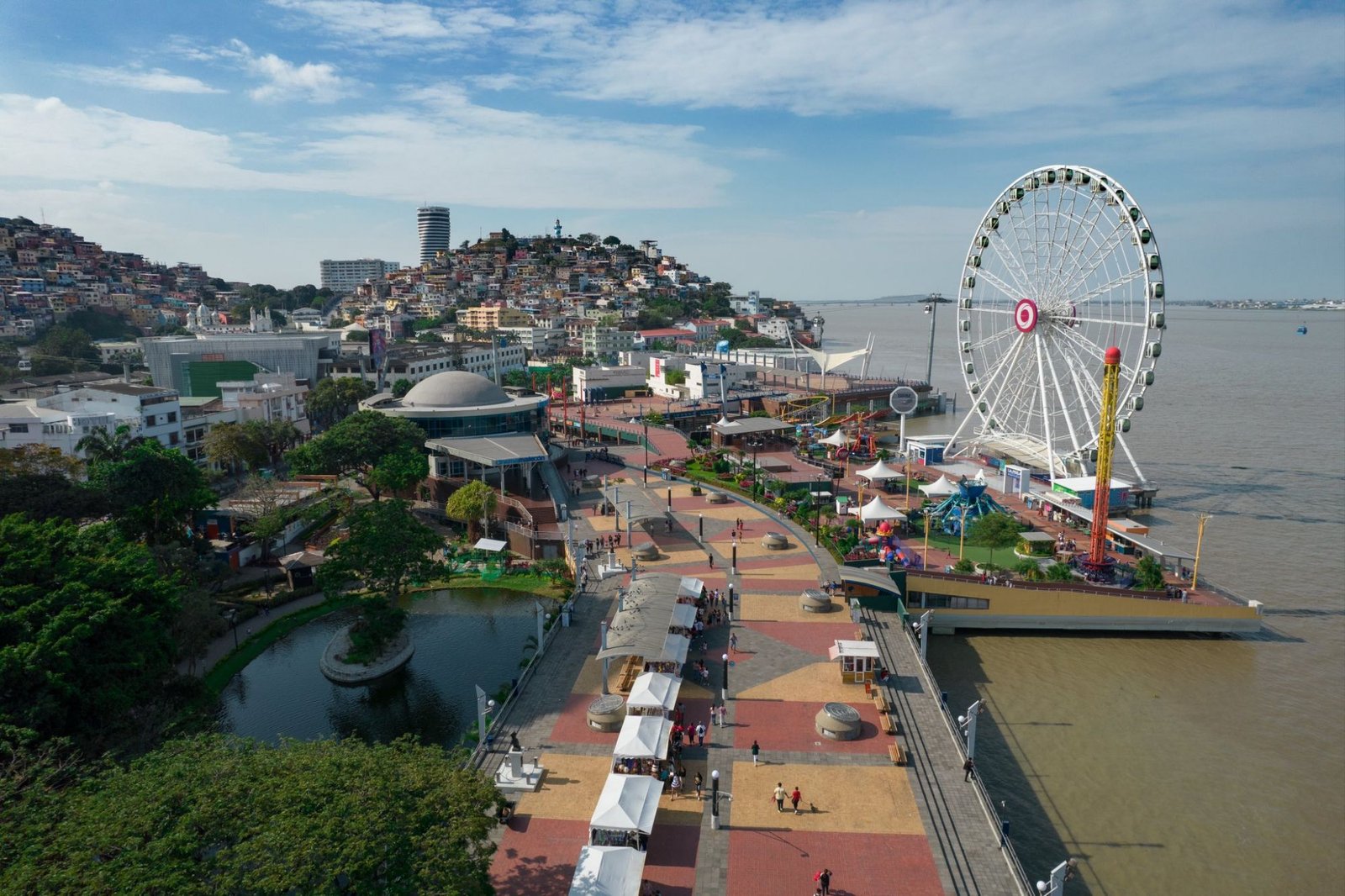
The city's boardwalks and linear parks are the soul of any Guayaquil tour. This city embraced by rivers and estuaries is best explored through its scenic promenades, parks, and bridges.
The city's largest boardwalk. It connects Las Peñas with Puerto Santa Ana. Features the MAAC museum, the Moorish Clock Tower, and La Rotonda monument.
A cultural hub featuring "La Bota" theater and Rodolfo Baquerizo Plaza. The perfect spot for a scenic boat ride through the estuary.
Avant-garde architecture and world-class gastronomy in the most cosmopolitan district of the city.
1.5 miles of parks, monuments, and shopping centers along the shores of the majestic Guayas River.
The iconic Public Clock, an architectural gem blending Moorish and Byzantine styles.
A historical monument commemorating the famous meeting between Bolivar and San Martin.
Originally designed in the Eiffel workshops, today it serves as a vibrant glass-and-iron cultural center.
From colonial treasures to contemporary avant-garde. Guayaquil’s heart beats through its museums, theaters, and chronicles that preserve the unbreakable spirit of the Pearl of the Pacific.
Explore fundamental milestones from the pre-Hispanic era to the Republican reconstruction.
An impressive collection of colonial art and archaeology facing the Administration Plaza.
The most avant-garde cultural center on Malecon 2000 with stunning Guayas River views.
A cultural map through iconic stages that tell the history of show business in Guayaquil.
Epic tales of Great Fires, reconstructions, and the resilient spirit of Ecuador's main port.
The city offers over 20 strategically located shopping centers, providing a seamless blend of retail, entertainment, and comfort for every visitor.
The city's first modern mall was Policentro (1978), inaugurated by former President Jaime Roldós.
The most photogenic hotspot in the city. Man-made canals, palm trees, and upscale dining.
European-inspired architecture hosting the most exclusive international brands.
The city's most complete mall, strategically located right next to the airport.
Spacious retail areas and one of the most modern cinemas in the northwestern district.
A modern meeting point in the Alborada district, perfect for shopping and leisure.
Italian-style open-air space for gourmet dining and a relaxed shopping experience.
The pioneer (1978). A cozy, traditional atmosphere located in the New Kennedy sector.
Located across from Seminario Park. Ideal for banking and shopping in the heart of the city.
Everything you need to organize your trip to the Pearl of the Pacific from scratch.
From José Joaquín de Olmedo Airport (GYE) to navigating safely with Metrovía and executive ride-hailing services.
Analysis of the best districts: Puerto Santa Ana for luxury, Downtown for culture, or Urdesa for local dining.
The top 10 must-visit landmarks, from the historic Santa Ana Hill to the iconic Malecon 2000 riverwalk.
A taste of Guayaquil: From the traditional "Encebollado" breakfast to fine dining in Samborondón.
"These immense constructions draw attention with their Gothic designs, masterpieces, and stained glass windows; as well as the legends and acts of faith surrounding their community, making them an essential tourist attraction for locals and visitors alike."
Neogothic marvel in the heart of downtown. Originally built in 1547 next to the City Hall, it remains the soul of the historic center.
Visit details →Located on Víctor Manuel Rendón St., this 1927 temple stands out for its Neo-Gothic-Byzantine inspiration and its rich artistic interior.
Explore Architecture →Known as "Our Lady of the Angels," it was rebuilt after several fires, honoring its 1920 design with enduring materials.
Discover History →Exploring Guayaquil is a journey through 500 years of history. From the Malecon 2000 to the Rotonda Monument, every corner celebrates the vibrant spirit of the Pearl of the Pacific.
"From the City Hall to the Las Peñas neighborhood, a former refuge for iconic figures such as Che Guevara and Pablo Neruda."
Colorful houses and cobblestone streets offering an authentic glimpse into the city's colonial and artistic past.
Full GuideClimb the 444 steps to the iconic lighthouse for a rewarding 360° panoramic view over the Guayas River.
Plan Your ClimbNeoclassical architecture where independence was forged on October 9th, 1820. An absolute cultural pillar.
Explore HistoryWidely known as Iguana Park, the most curious meeting point between wildlife and the urban heart of the city.
Visitor's GuideGuayaquil consolidates itself as Ecuador's epicenter for entertainment and business this year. Our city offers a vibrant mix for all tastes: from gala nights with international stars to specialized congresses driving the regional economy.
If you are looking for things to do in Guayaquil, the musical lineup is spectacular. Venues like Arena Park and Estadio Modelo will host icons such as Alejandro Sanz, Cuarteto de Nos, and Carlos Vives. Don't miss the Merengue Fest 90s for a night of pure rhythm.
The corporate sector meets at Expoplaza. The 2026 Guayaquil Trade Fair agenda includes industrial milestones like EDIFICA and AutoShow, along with global events like the World Banana Summit and the Raíces Gastronomy Fair.
“Trail Forth Journal is an independent editorial project dedicated to documenting maps, places, routes, and experiences across Ecuador, seen through a local lens.”
If this guide helped you plan your trip, feel free to write to me with any questions about your visit. You can also support the project.
Tell me about your dates, accommodation, or transportation questions so I can help you plan better.
This support is voluntary. It helps sustain this independent publishing project.
“Your voluntary support helps us continue documenting and sharing places across Ecuador from a local perspective.”
Contributions are voluntary. They are also non-refundable. These contributions help support the documentation work of Trail Forth Journal.