Rainy Season
JANUARY – APRIL
- Tropical vibe and lush green landscapes.
- Ideal for travelers who love authentic heat.
Discover the best things to do in Guayaquil in 2026. A gateway to the Galápagos Islands, explore food, culture, and local experiences in this complete travel guide.
Words & Photos: Trail Forth Journal.
To experience the best that Guayaquil has to offer, you need more than just a list of things to do — you need a route that takes into account safety, the climate and authentic local experiences. This guide encapsulates the essence of Ecuador’s coastal metropolis,
Guayaquil Travel.
offering everything from scenic walks along the Malecón 2000 and the vibrant Las Peñas district on Cerro Santa Ana, to the rich biodiversity of the Manglares Churute Ecological Reserve. Whether you’re seeking cultural immersion or nature-based day trips to places like the Cacao Route or Cajas National Park, Guayaquil is the ideal starting point for exploring both Ecuador’s coast and highlands. Recognised by the World Travel Awards, it is also the country’s main port and financial hub, as well as the primary gateway to the Galápagos Islands, offering excellent direct flight connections.
The city’s identity is closely tied to the Guayas River, which has transformed its historic waterfront into a vibrant district filled with museums, cultural landmarks and iconic structures such as the Moorish Clock Tower. This cultural journey continues with the city’s remarkable religious architecture, including the Guayaquil Metropolitan Cathedral, which is a symbol of faith and resilience. As you walk through the city, you will discover layers of history, from colonial roots to republican heritage, offering travellers a visually rich and meaningful experience at every turn.
As Ecuador’s economic powerhouse, Guayaquil has evolved into a vibrant destination offering world-class shopping and dining experiences, as well as a modern lifestyle. The city boasts premier shopping centres, a diverse culinary scene and contemporary entertainment districts that set regional trends. This modern energy, combined with the character of its dynamic port, makes it a place where urban sophistication meets authentic local culture, offering some of the finest experiences in commerce, gastronomy and entertainment along the Pacific coast.
explore
A complete journey through the city's highlights: Seminario Park (Iguana Park), Malecon 2000, and the historic Las Peñas Neighborhood.
Explore the La Rotonda Monument, cruise the Guayas River, and enjoy unique panoramic views before ending in historic Las Peñas.
Explore the Manglares Churute Ecological Reserve. Enjoy a boat ride for birdwatching and hike the trail of the howling monkeys.
Visit an authentic cocoa farm. Learn about the harvest of Fine Aroma Cocoa, participate in the chocolate-making process, and enjoy a unique tasting session.
Cross the stunning Cajas National Park and discover the magic of Cuenca, a UNESCO World Heritage site known for its cathedrals and history.
To make the most of your time in Guayaquil, it is important to understand its role as Ecuador’s main travel hub. Strategically located, the city lies at the intersection of the Andes, the Pacific Coast and the Galápagos Islands. Read on for all the information you need, including details of the local climate, how to get there by air or land, and the vibrant festivals that define the city’s character.
Guayaquil has two distinct seasons: the Dry Season (May to December), featuring cooler breezes and pleasant temperatures perfect for walking along the Malecón 2000; and the Rainy Season (January to April), characterized by intense tropical heat and lush, emerald landscapes.
The city is a major hub in South America. José Joaquín de Olmedo International Airport (GYE) is conveniently located just 15 minutes from the main hotel districts. For ground travel from Cuenca or along the Spondylus Route, Guayaquil Bus Terminal is the most modern and efficient transit hub in Ecuador, offering connections to destinations across the country.
JANUARY – APRIL
MAY – DECEMBER
Citywide celebrations with parades and gastronomy.
The city's largest civic event and festive atmosphere.
GYE: Located just 15 minutes from the tourist center.
Main hub with modern connections across Ecuador.
| Destination | Distance | Driving Time |
|---|---|---|
| Salinas | 140 km (87 mi) | 2h 00m |
| Cuenca | 195 km (121 mi) | 3h 30m |
| Montañita | 170 km (105 mi) | 2h 45m |
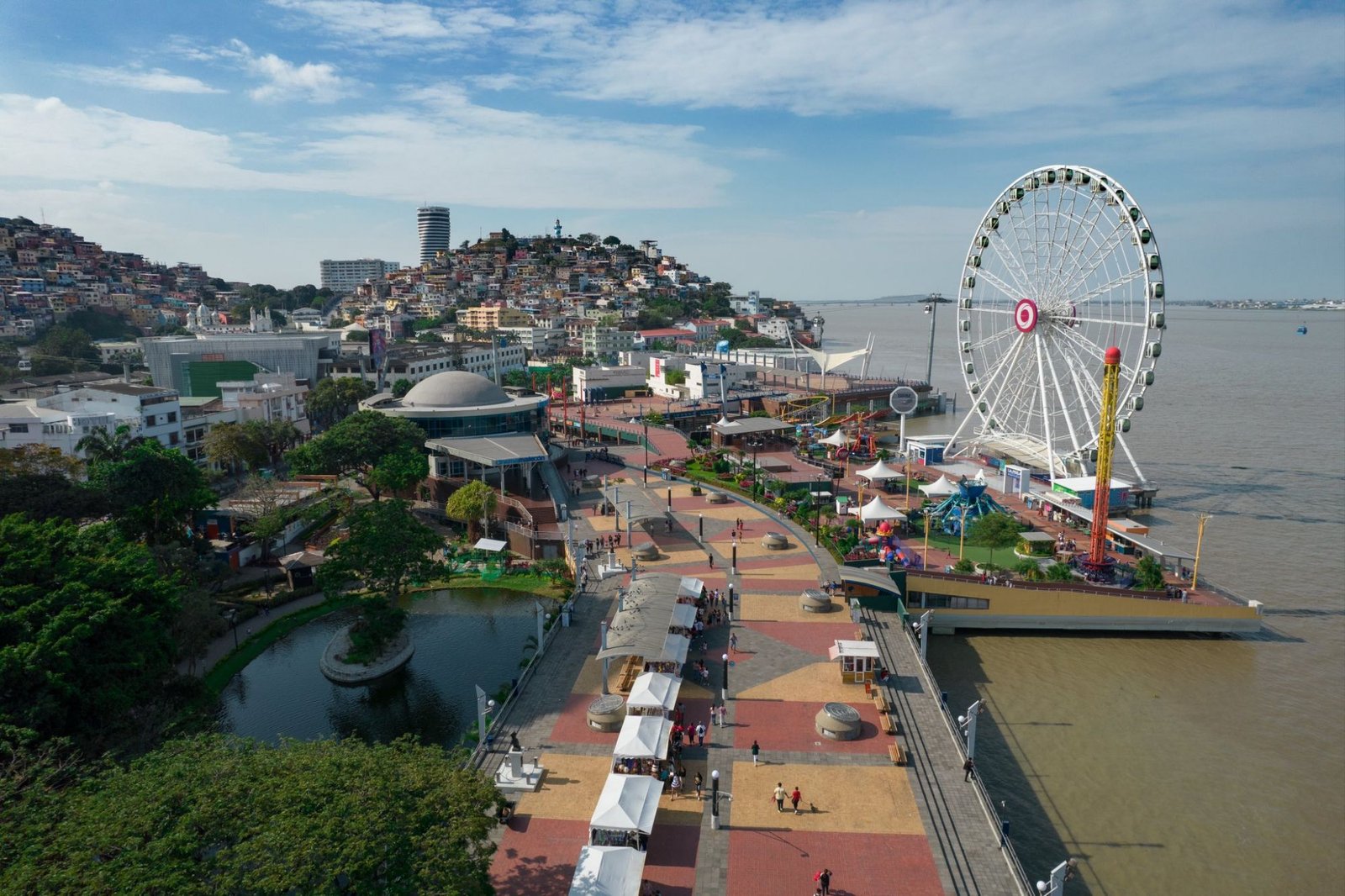
To truly grasp the identity of the ‘Pearl of the Pacific,’ it is essential to explore the city’s riverfront. The 1.5-mile Malecón 2000 route along the Guayas River seamlessly integrates museums, shopping centres, and the iconic La Rotonda monument. In contrast, the Malecón del Salado exudes a more bohemian and relaxed atmosphere. Connected to the Linear Park and the Monumental Dancing Water Fountain, it is an ideal spot to savour local gastronomy and the cool estuary breeze at sunset.
The city's largest boardwalk. It connects Las Peñas with Puerto Santa Ana. Features the MAAC museum, the Moorish Clock Tower, and La Rotonda monument.
A cultural hub featuring "La Bota" theater and Rodolfo Baquerizo Plaza. The perfect spot for a scenic boat ride through the estuary.
Avant-garde architecture and world-class gastronomy in the most cosmopolitan district of the city.
1.5 miles of parks, monuments, and shopping centers along the shores of the majestic Guayas River.
The iconic Public Clock, an architectural gem blending Moorish and Byzantine styles.
A historical monument commemorating the famous meeting between Bolivar and San Martin.
Originally designed in the Eiffel workshops, today it serves as a vibrant glass-and-iron cultural center.
Exploring Guayaquil’s network of museums reveals the resilient character of the ‘Pearl of the Pacific’. The city offers a fascinating journey through its past and present, from the colonial origins at the Municipal Museum and the sacred art at the Nahím Isaías, to the avant-garde MAAC overlooking the river. This cultural circuit is complemented by the vibrant Theatre District, where you can learn about Guayaquil’s epic history — from its era as the ‘City of Wood’ to its current modernity.
Explore fundamental milestones from the pre-Hispanic era to the Republican reconstruction.
An impressive collection of colonial art and archaeology facing the Administration Plaza.
The most avant-garde cultural center on Malecon 2000 with stunning Guayas River views.
A cultural map through iconic stages that tell the history of show business in Guayaquil.
Epic tales of Great Fires, reconstructions, and the resilient spirit of Ecuador's main port.
Greater Guayaquil is Ecuador’s commercial powerhouse, offering a shopping experience that blends modernity and exclusivity seamlessly. The retail landscape ranges from Mall del Sol, conveniently located near the airport, to upscale destinations like Alhambra Shopping Centre and Plaza Lagos, famed for their sophisticated architecture. For international brands, San Marino and Riocentro are essential stops, while the Artisanal Market remains the premier landmark for authentic local treasures.
The city offers over 20 strategically located shopping centers, providing a seamless blend of retail, entertainment, and comfort for every visitor.
The city's first modern mall was Policentro (1978), inaugurated by former President Jaime Roldós.
The most photogenic hotspot in the city. Man-made canals, palm trees, and upscale dining.
European-inspired architecture hosting the most exclusive international brands.
The city's most complete mall, strategically located right next to the airport.
Spacious retail areas and one of the most modern cinemas in the northwestern district.
A modern meeting point in the Alborada district, perfect for shopping and leisure.
Italian-style open-air space for gourmet dining and a relaxed shopping experience.
The pioneer (1978). A cozy, traditional atmosphere located in the New Kennedy sector.
Located across from Seminario Park. Ideal for banking and shopping in the heart of the city.
The city’s historic centre is home to an invaluable religious heritage, recounting centuries of faith and resilience. The journey begins at the Metropolitan Cathedral of Guayaquil, famed for its Neo-Gothic architecture, and continues towards San Francisco Church, one of the city’s oldest and most iconic landmarks. Essential stops include Santo Domingo Church at the foot of Santa Ana Hill and La Merced Church, where Baroque altars and colonial chronicles are safeguarded.
"These immense constructions draw attention with their Gothic designs, masterpieces, and stained glass windows; as well as the legends and acts of faith surrounding their community, making them an essential tourist attraction for locals and visitors alike."
Neogothic marvel in the heart of downtown. Originally built in 1547 next to the City Hall, it remains the soul of the historic center.
Visit details →Located on Víctor Manuel Rendón St., this 1927 temple stands out for its Neo-Gothic-Byzantine inspiration and its rich artistic interior.
Explore Architecture →Known as "Our Lady of the Angels," it was rebuilt after several fires, honoring its 1920 design with enduring materials.
Discover History →The best way to experience Guayaquil’s heritage is on foot, wandering through its oldest neighbourhoods and past its most impressive monuments. The journey through the historic centre begins in Barrio Las Peñas, the city’s birthplace, where cobblestone streets lead up Santa Ana Hill, with its 444 steps. The City Hall (Palacio Municipal), with its Neoclassical architecture, stands out in the institutional heart of the city, while Seminario Park — famously known as ‘Iguana Park’ — offers a unique encounter with urban nature. These iconic landmarks represent centuries of history and resilience, and are essential stops for anyone looking to truly understand the identity of the ‘Pearl of the Pacific’.
Exploring Guayaquil is a journey through 500 years of history. From the Malecon 2000 to the Rotonda Monument, every corner celebrates the vibrant spirit of the Pearl of the Pacific.
"From the City Hall to the Las Peñas neighborhood, a former refuge for iconic figures such as Che Guevara and Pablo Neruda."
Colorful houses and cobblestone streets offering an authentic glimpse into the city's colonial and artistic past.
Full GuideClimb the 444 steps to the iconic lighthouse for a rewarding 360° panoramic view over the Guayas River.
Plan Your ClimbNeoclassical architecture where independence was forged on October 9th, 1820. An absolute cultural pillar.
Explore HistoryWidely known as Iguana Park, the most curious meeting point between wildlife and the urban heart of the city.
Visitor's GuideIn 2026, Guayaquil will establish itself as Ecuador’s ultimate events and productivity hub, offering an unrivalled calendar that combines mass entertainment with high-level networking opportunities. If you’re looking for things to do in Guayaquil today, our curated agenda offers a vibrant mix, including international concerts at Arena Park and the Modelo Stadium featuring artists such as Alejandro Sanz and Carlos Vives, as well as leading regional congresses and trade fairs at Expoplaza, including Raíces and the World Banana Summit. The city guarantees a premier cultural and business offering across the Main Port’s most iconic venues, from grand gala nights to specialised corporate events.
Guayaquil consolidates itself as Ecuador's epicenter for entertainment and business this year. Our city offers a vibrant mix for all tastes: from gala nights with international stars to specialized congresses driving the regional economy.
If you are looking for things to do in Guayaquil, the musical lineup is spectacular. Venues like Arena Park and Estadio Modelo will host icons such as Alejandro Sanz, Cuarteto de Nos, and Carlos Vives. Don't miss the Merengue Fest 90s for a night of pure rhythm.
The corporate sector meets at Expoplaza. The 2026 Guayaquil Trade Fair agenda includes industrial milestones like EDIFICA and AutoShow, along with global events like the World Banana Summit and the Raíces Gastronomy Fair.
Essential experiences include strolling along the iconic Malecón 2000 and the historic Barrio Las Peñas, exploring the city’s sacred architecture, and enjoying the vibrant lifestyle at Puerto Santa Ana. Furthermore, the city is a premier shopping destination; we highly recommend discovering the "Pearl of the Pacific's" updated cultural agenda.
For a deep and authentic perspective, the finest options include private City Tours through the historic centre, nature excursions to the Manglares Churute Ecological Reserve, and gourmet chocolate routes at traditional cocoa haciendas near the city.
Guayaquil is Ecuador’s gastronomic capital. Don't miss traditional Encebollado (voted one of the world's best soups) at local markets, or enjoy high-end fusion cuisine at the upscale restaurants in Plaza Lagos and Alhambra Shopping Centre.
Tourism in Guayaquil has seen significant security enhancements. We recommend staying within designated Tourist Corridors like the Malecón, Las Peñas, and Puerto Santa Ana. For the best experience, use registered transport apps or private hotel transfers when exploring the city at night.
The "dry season" from June to December offers cooler temperatures and pleasant breezes, ideal for walking tours. However, visiting during the rainy season (January to May) allows you to witness the lush, tropical greenery of the surrounding coast at its peak.
“Trail Forth Journal is an independent editorial project dedicated to documenting maps, places, routes, and experiences across Ecuador, seen through a local lens.”
If this guide helped you plan your trip, feel free to write to me with any questions about your visit. You can also support the project.
Tell me about your dates, accommodation, or transportation questions so I can help you plan better.
This support is voluntary. It helps sustain this independent publishing project.
“Your voluntary support helps us continue documenting and sharing places across Ecuador from a local perspective.”
Contributions are voluntary. They are also non-refundable. These contributions help support the documentation work of Trail Forth Journal.