
Quito Historical Center | UNESCO World Heritage Site since 1978

The historic Centre of Quito

Visit to the precious historical centre of Quito. The Ecuadorian capital has the best-preserved historic centre in Latin America.

Words & Photos: Trail Forth Journal.

Contents

Geography and History: The Origin of Quito

Quito, the capital of Ecuador, was founded in the 16th century on the ruins of an Inca city and stands at an altitude of 2,850 m. Despite the 1917 earthquake, the city has the best-preserved, least altered historic centre in Latin America. The monasteries of San Francisco and Santo Domingo, and the Church and Jesuit College of La Compañía, with their rich interiors, are pure examples of the ‘Baroque school of Quito’, which is a fusion of Spanish, Italian, Moorish, Flemish and indigenous art.

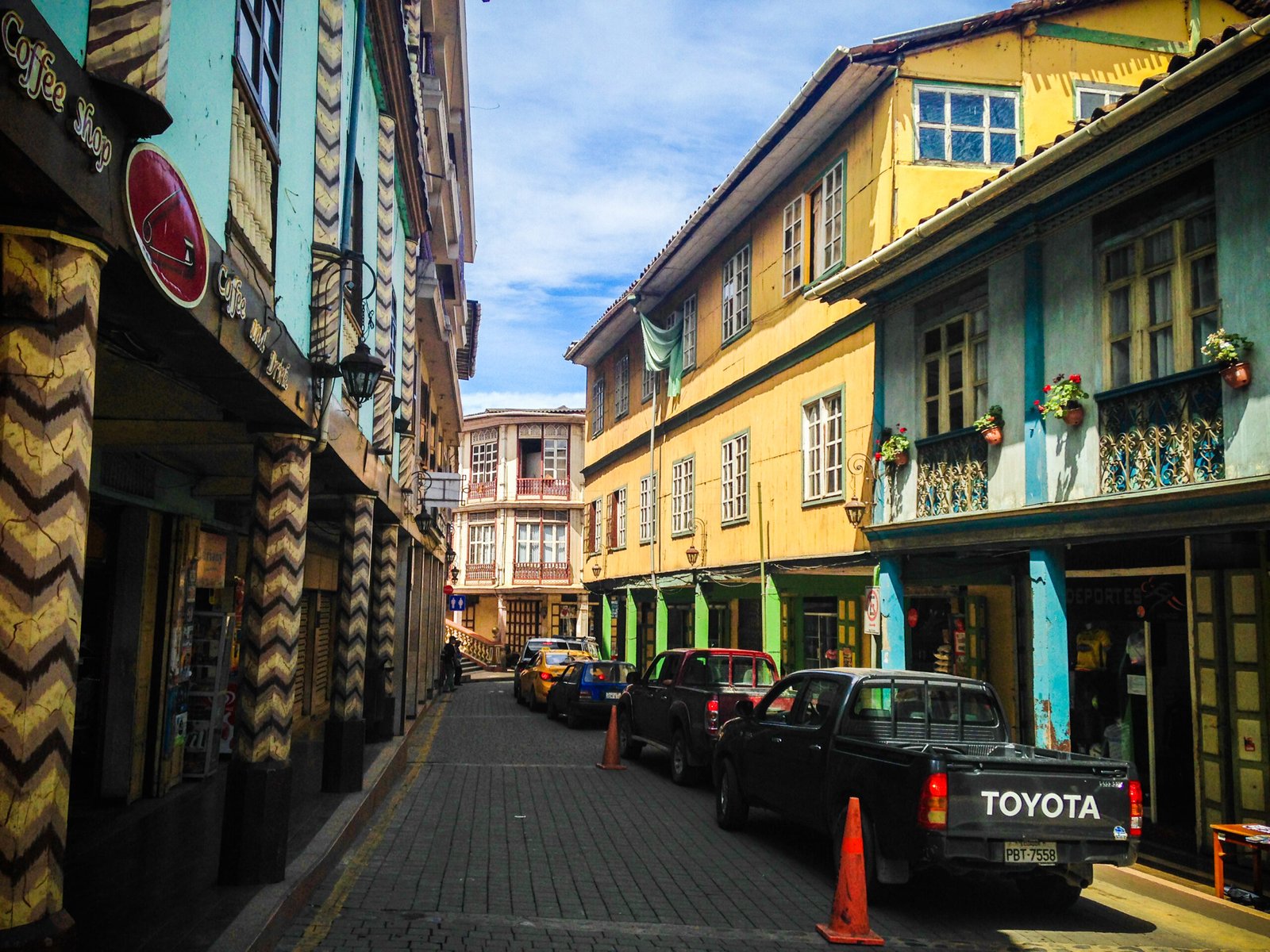
View of Quito’s historic center.

Isolated in the Andes at 2,818 m. altitude, the city of Quito is spread along the slopes of the Pichincha Volcano and is bordered by the hills of Panecillo and Ichimbia.  Founded by the Spanish in 1534, on the ruins of an Inca city, Quito proudly possesses one of the most extensive and best-preserved historic centres of Spanish America.

Location Map: Historical centre of Quito

The Splendor of the Baroque and the Quito School

The city offers a remarkable example of the Baroque school of Quito (Escuela Quitena), that brings together the indigenous and European artistic traditions and which is renowned for providing the greatest contribution of Spanish America to universal art.  The height of this art is represented by veritable spiritual citadels, among which are San Francisco, San Domingo, San Augustin, La Compana, La Merced, the Sanctuary of Guapulco and the Recoleta of San Diego, to name just the principal ones. These are recognized not only for their artistic value from the architectural viewpoint but also for their decorative elements (altarpieces, paintings, sculptures).

Colonial Architecture and Harmonious Urban Design

The city of Quito forms a harmonious ensemble where nature and man are brought together to create a unique and transcendental work.  The colonizers knew how to adapt their artistic sensibility to the reality that surrounded them, building their architecture in a very complex topographical environnent. Despite this, the architects were able to confera stylistic and volumetric harmony to the ensemble. The urban routes are based on the original plan and include central and secondary squares as well as checkerboard-patterned streets and are aligned on the cardinal points of the compass. In the city centre, there are convents and churches as well as houses (1 or 2 floors with one or several patios), usually built with earthen bricks and covered with stucco, combining the monumental with the simple and austere.

Historical centre of Quito

National Identity and Criteria for Outstanding Universal Value

The city of Quito, the cradle of Pre-Colombian cultures and an important witness of Spanish colonization maintains, for the time being unity and harmony in its urban structure despite centuries of urban development.

Elevated to the title of capital of the Audience of Quito, it assumed the political direction and patronal control over the villages and towns. This is the maximum representation of the step towards forming socio-economic development, creator of a true national idiosyncrasy expressed through its unique tangible and intangible heritage.

The influence of the Baroque school of Quito (Escuela Quitena) was recognized in the cultural domain, especially art – architecture, sculpture and painting – in all the cities of the Audencia, and even in those of the neighbouring Audencia.

Quito forms a harmonious sui generis where the actions of man and nature come together, to create a unique and transcendental work of its kind.

Integrity: Preservation Against the Passage of Time

The great majority of attributes upon which the Outstanding Universal Value of the City of Quito is based are present and intact. The Historic Centre of Quito has conserved its original configuration, new constructions being built outside of the colonial centre. Indeed, based on the first plan of Quito designed in 1734 by Dionisio Alcedo y Herrera, one notes that the original plan of the streets, the blocks of houses and squares – with a few rare exceptions – is the same can be seen today.

Despite numerous earthquakes that have affected it over the course of history, the city conserves the least modified historic centre of all Latin America because of the concerted action of the Municipal authorities of the Metropolitan District of Quito and the Ecuadorean government.

This is El Panecillo as seen from Quito’s historic district.

Authenticity: Living Tradition and Local Materials

In general, the urban plan and its integration into the landscape may be considered as entirely authentic because the original generic form has remained unaltered and the Plaza Mayor (Main Square) has developed organically with very few changes. The preservation of traditional trades, the contributions of craftsmen holders of ancient know-how and the use of local materials (stone, lime, mud and wood) make it possible to maintain the significant characteristics of the different architectonic components and their decorative elements.

Historical Comparison: The Historic Centers of Quito and Cuenca

Quito and Cuenca are prime examples of Spanish colonial urban planning in the Ecuadorian Andes; however, they differ markedly in terms of their architectural identity and geographical integration. On one hand, both cities were refounded on the ruins of important pre-Hispanic settlements—an Inca city in Quito and the Inca-Cañari territory of Tomebamba in Cuenca—and likewise, both have masterfully preserved their original orthogonal grid layout despite centuries of development. On the other hand, their urban landscapes diverge significantly due to topography and economic evolution. Quito’s historic center is characterized by a dense and dramatic alignment along the complex slopes of the Pichincha Volcano, creating a monumental ensemble renowned for the decorative and architectural richness of the Baroque Quito School. In contrast, Cuenca’s historic center extends more openly across a flat valley irrigated by four rivers and bounded by the picturesque El Barranco riverside profile. Additionally, while Quito’s architecture tends toward the monumental and spiritual, Cuenca’s exhibits a Renaissance imprint that highlights the fusion of colonial vernacular with 19th-century European styles, a dynamism driven by the historic quinine and toquilla straw hat export booms.

Trail Forth Journal

Jairo Cabrera Ecuador

Jairo Cabrera

Editor · Travel Routes & Experiences Curator

“Trail Forth Journal is an independent editorial project dedicated to documenting maps, places, routes, and experiences across Ecuador, seen through a local lens.”

If this guide helped you plan your trip, feel free to write to me with any questions about your visit. You can also support the project.

How can I help you?

Tell me about your dates, accommodation, or transportation questions so I can help you plan better.

This support is voluntary. It helps sustain this independent publishing project.

QR Deuna
QR Zelle

Contribution Policy

Contributions are voluntary. They are also non-refundable. These contributions help support the documentation work of Trail Forth Journal.

Share

The Local Circuit

The Path Ahead

error: Content is protected !!